Updated November 14, 2026
The best backup generator for a home is the smallest one that starts the way you need it to and runs the loads you cannot live without. For most houses that is one of three things: a natural gas or propane home standby generator that starts itself, a 240V portable generator connected through a transfer switch or interlock, or a whole-home battery that switches over silently and recharges from the grid, solar or a generator.
This guide ranks the best backup generators for home power outages in 2026 across all three types, from a 13kW Cummins standby unit to an 11,000-watt tri-fuel portable to a 7,200W EcoFlow battery. Every output, fuel, run time, noise and weight figure comes from our own product pages, which follow each maker's documentation, and every price is our live price as of November 14, 2026.
We carry all ten picks. If a maker publishes no figure for something, we say so instead of guessing, and we say who should not buy each one.
For the whole system, from transfer switches and smart panels to sizing by kilowatt-hours and installation, start with our home backup power buyer's guide, the hub for this series.
For automatic whole-house backup, the Cummins RS20A (20kW) is our pick, with the Generac Next-Gen 14kW for mid-size homes and the Cummins RS13A for essentials. For a portable generator, the Cummins Onan P9500DF EFI gives 7,500 running watts at 240V for $1,700, and the DuroMax XP13750HXT runs on natural gas. For silent backup with no fuel, the EcoFlow TITAN 5000 delivers 7,200W at 240V.
Prices are from our product pages as of November 14, 2026. Standby prices exclude the transfer switch, pad and installation unless stated. Noise ratings are each maker's own figure at the stated load and distance.
A backup generator is any source of electricity that takes over when the utility fails. Three kinds are sold for homes, and the right one depends less on brand than on how much of the house you want to run, whether anyone will be home to start it, and what fuel you can keep on hand.
A home standby generator is installed permanently outside, runs on natural gas or propane from a fixed supply, and starts itself through an automatic transfer switch. A portable generator is rolled out, started and connected when you need it, and runs on gasoline, propane or natural gas. A battery backup stores energy indoors and switches over in milliseconds, then recharges from the grid, solar or a generator.
| Home standby generator | Portable generator | Battery backup | |
|---|---|---|---|
| Starts by itself | Yes, with an automatic transfer switch | No, you start it and plug it in or switch it over | Yes, as a UPS or through a smart panel |
| Fuel | Natural gas or propane from a fixed supply | Gasoline, propane or natural gas | Stored energy, recharged from the grid, solar or a generator |
| Run time | As long as the gas supply lasts | Hours per tank, then refuel | Hours to days, depending on battery size and load |
| Output we carry | 10kW to 28kW air-cooled, or larger liquid-cooled units | 4,500W to 13,000W running, most with 240V | 2,400W to 12kW, 120V or 120/240V |
| Noise | 65 to 67 dB(A) at 23 ft on the models here | 61 to 74 dB on the models here | Near silent; the TITAN 5000 is rated under 39 dB |
| Installation | Licensed electrician and gas contractor, concrete pad | Interlock or transfer switch by an electrician, or extension cords | Plug in, or an electrician for whole-home switching |
| Where it lives | Outside, 18 inches or more from the house | Outside only, 20 feet or more from the house | Indoors, in a garage or utility room |
| Price at Outbound Power | From $3,916.59 (10kW) before the transfer switch | From $641.18 (4,500W) in this guide | From $1,899 (plug-in) in this guide |
Figures from the products in this guide, checked November 14, 2026. Placement distances follow NFPA 37 for standby units (per the Cummins and Generac product pages) and the CPSC's 20-foot guidance for portable generators.

This table puts the ten picks side by side. Watts are each maker's continuous rating on gasoline for the fuel generators, the rated output for the batteries, and the kilowatt rating for the standby units. Peak watts, propane and natural gas output, run times and weights are in each card below.
| Generator | Type | Watts | Fuel | Noise | Price |
|---|---|---|---|---|---|
| Cummins RS20A | Standby | 20kW | Natural gas or propane | 65 dB(A) at 23 ft | $6,465.90 |
| Generac Next-Gen 14kW | Standby | 14kW | Natural gas or propane | 65 dB(A) at 23 ft | $5,081.30 |
| Cummins RS13A | Standby | 13kW | Natural gas or propane | 65 dB(A) at 23 ft | $4,705.48 |
| Cummins Onan P9500DF EFI | Portable | 7,500W | Gasoline or propane | As low as 74 dBA | $1,700 |
| DuroMax XP13750HXT | Portable | 11,000W | Gas, propane or natural gas | Under 74 dB at 50% load | $1,999 |
| Generac GP9500E | Portable | 9,500W | Gas, propane or natural gas | Not listed | $1,237.77 |
| DuroMax XP9500iH | Inverter | 7,600W | Gasoline or propane | 61 dB at 25% load | $2,069.41 |
| EcoFlow TITAN 5000 | Battery | 7,200W | 5kWh, to 30kWh | Under 39 dB | $3,199 |
| Anker SOLIX E10 | Battery | 7,680W | 6kWh to 30kWh | Not listed | $3,999 |
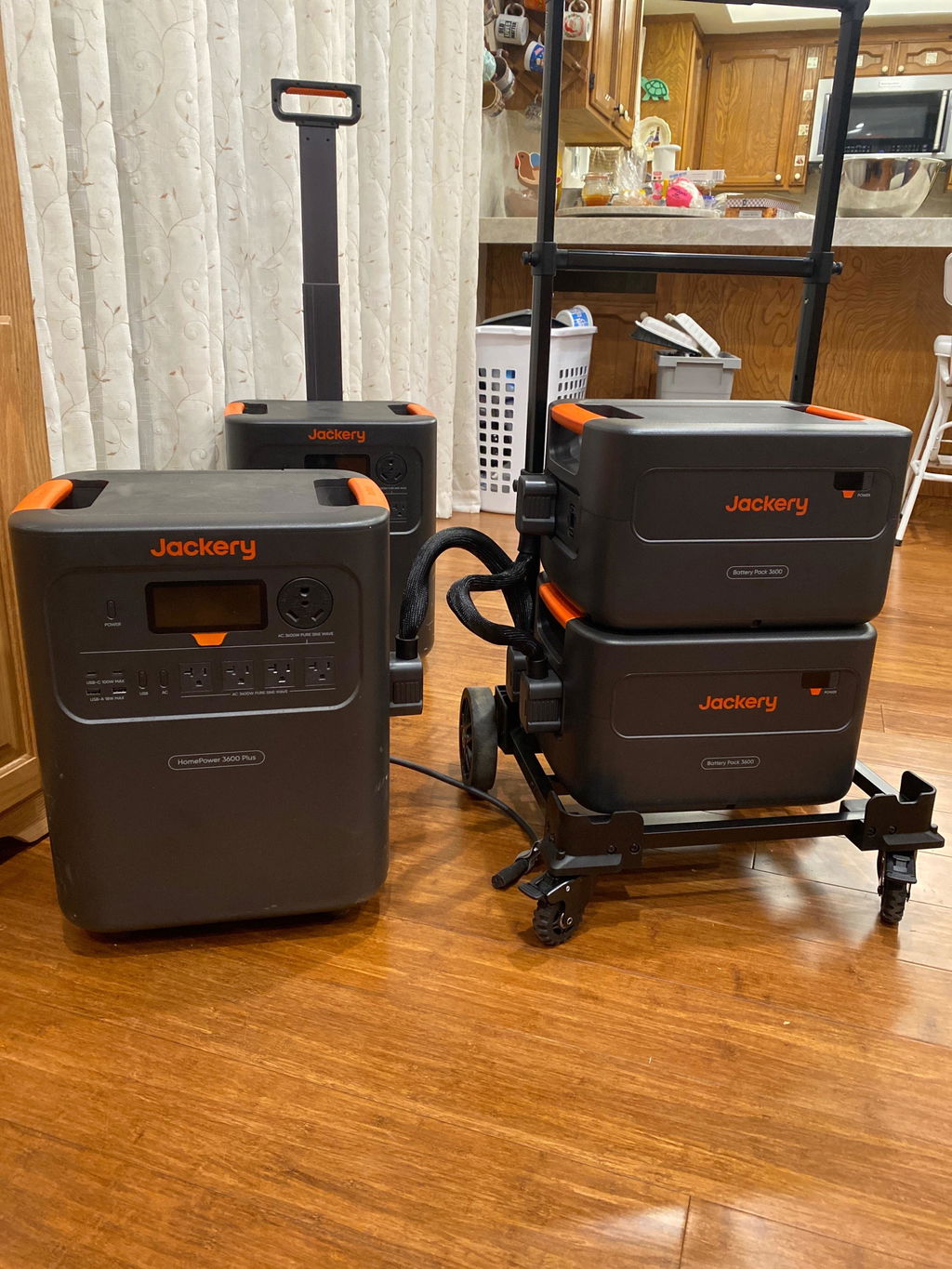
| Jackery HomePower 3600 Plus | Battery | 3,600W | 3.6kWh, to 5 packs | Not listed | $1,899 |
Specifications from our product pages, checked November 14, 2026. Not listed means the maker publishes no figure. Every pick supplies 120/240V except the HomePower 3600 Plus, which is 120V on its own. Standby prices are for the generator without a transfer switch.
Here are the best backup generators for home use this year, grouped by type: three standby generators, four portable generators and three battery systems. Each card lists the specifications we verified, the price today, who it suits and what to think about before buying.

The Cummins RS20A is the backup generator for a home that wants the lights back on without anyone going outside. It is a 20kW air-cooled standby generator that runs on natural gas or propane vapor, starts itself when the grid drops and hands the house back to the utility when power returns, all through an automatic transfer switch.
Cummins rates it at 65 dB(A) at 23 feet at normal load, the same figure as the smaller RS13A, and builds it with an aluminum enclosure rated for 180 mph wind loads. Remote monitoring is built in, and the motor-starting rating of 40 kVA is the highest of the three Cummins air-cooled sizes, which is what matters for central air.
Price at Outbound Power: $6,465.90 as of November 14, 2026 for the standard cold weather model; the RS20AC with a 200A service-entrance rated transfer switch is $7,495.23.
Best for: homes that want automatic whole-house backup, including central air, on a natural gas or propane supply.
What to Consider Before Buying

The Generac Next-Gen 14kW is Generac's 14kW air-cooled standby generator (model G0072580) with built-in cellular, Wi-Fi and Bluetooth, so the Mobile Link app shows its status and maintenance alerts from anywhere. It runs on natural gas or propane, restores power within seconds of an outage and uses electronic fuel and ignition control.
Generac rates it at 65 dB(A) at 23 feet at normal load and 55 dB(A) in Quiet-Test mode, its exercise setting. At 391 lb it is the lightest standby unit here, and the 200A whole-house transfer switch is a checkout option on our product page.
Price at Outbound Power: $5,081.30 as of November 14, 2026 without a transfer switch, or $6,182.48 with the 200A whole-house transfer switch.
Best for: a home that needs essentials plus a central air unit and wants app monitoring, at the lowest price here for a standby generator with a transfer switch.
What to Consider Before Buying

The Cummins RS13A is the lowest-priced standby generator we carry. It shares the RS20A's 999cc V-twin engine, aluminum enclosure, 100A breaker and 65 dB(A) rating, with 13kW of output and a 26 kVA motor-starting rating, which covers essential circuits, a furnace, a well pump and a smaller air conditioner.
Cummins gives it the same built-in remote monitoring, intelligent load management and flexible exercise controls as the larger sizes, and a cold-weather package. An Extreme Cold Weather version, the RS13AE, is also on our product page.
Price at Outbound Power: $4,705.48 as of November 14, 2026; the RS13AE Extreme Cold Weather model is $5,127.42.
Best for: smaller homes, or homes that want automatic backup for essentials and one large motor load rather than the whole house.
What to Consider Before Buying


The Cummins Onan P9500DF EFI is the portable pick for most homes. It makes 7,500 running watts and 9,500 peak watts on gasoline, or 6,750 and 8,550 watts on propane, from a 420cc electronically fuel-injected engine, with a 120/240V 30A twist-lock outlet for a transfer switch and a remote start fob that works from 98 feet.
The 6.6-gallon tank gives 16 hours at a quarter load and 11 hours at half load, a 20 lb propane tank gives 8 hours at a quarter load, and a carbon monoxide sensor shuts it down if CO builds up. It is EPA and CARB approved, so it ships to California.
Price at Outbound Power: $1,700 as of November 14, 2026.
Best for: homeowners who want 240V backup for essentials plus a well pump or window AC, with a manual transfer switch, at the lowest price per watt of the 240V picks.
What to Consider Before Buying

The DuroMax XP13750HXT is the portable generator to buy if your home has natural gas. It runs on gasoline (11,000 running and 13,750 peak watts), propane (10,500 and 13,000 watts) or natural gas (9,250 and 11,250 watts) from a 500cc engine, and the 15-foot natural gas hose and 4-foot propane hose come in the box.
A 50A 14-50R outlet feeds an interlock or transfer switch, DuroMax rates it for central air alongside a refrigerator and lights, and it starts from the included remote, the push button or the recoil cord. The 9.3-gallon tank runs about 11 hours at half load on gasoline, and it is covered for 5 years.
Price at Outbound Power: $1,999 as of November 14, 2026.
Best for: homes with a natural gas line that want whole-house-class portable power without storing fuel.
What to Consider Before Buying

The Generac GP9500E is the budget tri-fuel pick: 9,500 running and 12,500 starting watts on gasoline, 8,550 and 11,250 on propane, or 7,000 and 9,000 on natural gas, with 120/240V output and electric start, for $1,237.77. Generac's COsense technology shuts it down if carbon monoxide builds up.
The 7.5-gallon tank gives 14 hours at a quarter load or 9.5 hours at half load, a 20 lb propane tank gives 6 and 4.5 hours, and Generac lists it as HomeLink manual transfer switch compatible. The propane hose and regulator come in the box; a natural gas connection needs a gas professional.
Price at Outbound Power: $1,237.77 as of November 14, 2026.
Best for: a first 240V backup generator on a budget, especially where natural gas or propane is already on the property.
What to Consider Before Buying

The DuroMax XP9500iH is the quiet, clean-power portable on this list. Its 459cc engine makes 7,600 running and 9,500 peak watts on gasoline (7,200 and 9,025 on propane) with less than 3% total harmonic distortion, and demand-based variable idle keeps it at 61 dB at a quarter load.
It has the same 50A 14-50R and 30A L14-30R outlets as the big open-frame models, remote start, CO Alert and a 7.1-gallon tank good for 21 hours at a quarter load or 11 hours at half load. DuroMax covers it for 5 years.
Price at Outbound Power: $2,069.41 as of November 14, 2026.
Best for: households with computers, smart appliances and HVAC control boards that want inverter-clean 240V power and the quietest fuel generator here.
What to Consider Before Buying


The EcoFlow TITAN 5000 is a 5kWh battery and 7,200W inverter in one floor-standing unit, and the standby alternative that needs no fuel, no exhaust and far less installation work than a hardwired home battery. It puts out 7,200W at 120V and 240V, and EcoFlow says it can start and run a compatible 3-ton central air conditioner without a soft starter.
Add up to five TITAN Battery 5kWh packs for 30kWh, connect up to 4,000W of solar, and pair it with the Smart Home Panel 10 so ten circuits switch to battery in under 20 milliseconds. In EcoFlow's testing it stays below 39 dB at 3,600W, and it lives indoors in a garage or utility room.
Price at Outbound Power: $3,199 as of November 14, 2026 for the main unit alone; $4,290 with the Smart Home Panel 10 (240V).
Best for: homes that want automatic, silent 240V backup for essentials and central air, with solar charging and no fuel to store.
What to Consider Before Buying

The Anker SOLIX E10 is a wall- or floor-mounted hybrid system built to replace a standby generator outright. Each power module delivers 7.68kW of continuous output, 10kW for up to 90 minutes with two or more batteries, and up to 155A of locked-rotor starting power, enough for a 5-ton central air conditioner.
The Essential Power Backup Kit we price here is one power module and one 6kWh LFP battery, expandable to 30kWh per module and 90kWh across a full system. It switches over in under 20 milliseconds, takes up to 9kW of solar per module, and pairs with the Anker SOLIX Smart Generator 5500 so a tri-fuel generator starts itself to recharge the batteries during a long outage.
Price at Outbound Power: $3,999 as of November 14, 2026 for the Essential Power Backup Kit with one 6kWh battery and no solar panels.
Best for: homes that want whole-house battery backup with central air and a path to solar and a self-starting generator, without a gas standby unit.
What to Consider Before Buying

The Jackery HomePower 3600 Plus is the plug-in backup generator for a home that cannot install anything: an apartment, a rental or a house where the electrical panel is off limits. It stores 3,584Wh in LiFePO4 cells rated for 6,000 cycles, delivers 3,600W with a 7,200W surge, and switches over as a UPS when the grid drops.
Four 20A household outlets and a TT-30 30A outlet run a refrigerator, a freezer, a microwave and electronics in the house, it recharges at up to 1,800W from the wall or 1,000W from solar, and Jackery's battery packs add 3.6kWh each up to five packs. Jackery covers it for 5 years.
Price at Outbound Power: $1,899 as of November 14, 2026; it is a pre-order, shipments resume November 22.
Best for: apartments, rentals and homes without a transfer switch, and anyone who wants silent indoor backup for a refrigerator and electronics.
What to Consider Before Buying
A standby generator is the only option that starts itself on a fuel supply that never runs out, but it is also the most expensive to install and the one you cannot take with you. If the installation cost or the gas line is the problem, three home standby alternatives cover most of the same ground.
A 240V portable generator such as the Cummins Onan P9500DF EFI or DuroMax XP13750HXT, connected through a manual transfer switch or an interlock kit installed by a licensed electrician, powers the same circuits a standby unit would. You start it and switch it over yourself, and you refuel it every tank, but the generator costs a fifth to a third of a standby unit and a tri-fuel model can run from your natural gas line. Our guide to portable generators for home power backup goes deeper on the high-output models, and our tri-fuel generators guide covers the natural gas connection.
The EcoFlow TITAN 5000 and the Anker SOLIX E10 switch over automatically in under 20 milliseconds, run silently indoors and need no fuel, no exhaust clearance and no gas contractor. Their limit is stored energy: 5kWh or 6kWh runs essentials and short bursts of central air for hours, and multi-day outages need more battery packs, solar panels or a generator feeding the battery. For a refrigerator and electronics only, a plug-in unit such as the Jackery HomePower 3600 Plus needs no installation at all.
A combination worth considering is a battery for the first hours, with a fuel generator that recharges it during long outages. The battery handles the switchover and the quiet overnight hours, and the generator runs a few hours a day at an efficient load instead of idling around the clock. The Anker SOLIX E10 does this automatically with the Anker SOLIX Smart Generator 5500 ($1,999), and the TITAN 5000 accepts up to 7,200W of AC charging from any generator through its included cable.
Add up the running watts of everything you want to run at the same time, then add the extra starting watts of the largest motor, which is usually the air conditioner, a well pump or a sump pump. Size by running watts and check the generator's peak or starting rating against that one startup moment. These planning figures are typical for household equipment; the nameplate on your own appliance is the number to use.
| Load | Running watts | Starting watts |
|---|---|---|
| Refrigerator or freezer | 100 to 250W | 600 to 1,200W |
| Sump pump, 1/3 to 1/2 HP | 800 to 1,050W | 1,300 to 2,200W |
| Gas furnace blower | 400 to 800W | 1,200 to 2,400W |
| Well pump, 1/2 to 1 HP | 1,000 to 2,000W | 2,000 to 4,000W |
| Lights, phones, router, TV | 200 to 500W | Same |
| Microwave | 1,000 to 1,500W | Same |
| Window air conditioner | 500 to 1,500W | 1,500 to 4,500W |
| Electric water heater | 4,500W | Same |
| Central air conditioner, 3 ton | 3,000 to 3,500W | 2 to 3 times running watts |
| Electric range, one large element | 2,000 to 2,500W | Same |
Planning figures only. Motors and compressors draw 2 to 3 times their running watts for a moment at startup. Check the labels on your equipment and your air conditioner's locked-rotor amps.
Three sizes cover most homes. Essentials (refrigerator, freezer, sump pump, furnace blower, lights, phones and Wi-Fi) fit in 3,500 to 5,500 running watts. Add a well pump, a window air conditioner or one 240V appliance and you need 7,500 to 11,000 running watts with a 240V outlet. Running most of the house, including a 3-ton central air unit, an electric water heater and a range, takes a 13kW to 22kW standby generator or a battery system rated for the air conditioner's starting current.
| What you want to run | Running watts | Picks on this list |
|---|---|---|
| Essentials: refrigerator, freezer, sump pump, furnace blower, lights, phones, Wi-Fi | 3,500 to 5,500W | Jackery HomePower 3600 Plus, DuroMax XP5500HX, Generac iQ5200 |
| Essentials plus a well pump, a window AC or a 240V appliance | 7,500 to 11,000W, 240V | Cummins Onan P9500DF EFI, Generac GP9500E, DuroMax XP9500iH, DuroMax XP13750HXT, EcoFlow TITAN 5000 |
| Most of the house, including central air | 13kW to 22kW, 240V | Cummins RS13A, Generac Next-Gen 14kW, Cummins RS20A, Generac Next-Gen 22kW, Anker SOLIX E10 |
Standby generators are sized in kilowatts of continuous output and by their motor-starting rating. The Cummins RS13A is rated at 26 kVA of motor starting, the RS17A at 34 kVA and the RS20A at 40 kVA, which is why the larger unit is the one to pick for a big central air unit even when the running load would fit a smaller one. A licensed electrician or our team can run a load calculation for your panel.
At Outbound Power on November 14, 2026, the air-cooled standby generators in this guide run from $4,705.48 for the 13kW Cummins RS13A to $6,553.06 for the Generac Next-Gen 22kW before the transfer switch, and our range starts at $3,916.59 for the Generac Next-Gen 10kW. Generac's 200A whole-house transfer switch adds $1,101.18 to the 14kW model at checkout, and Cummins sells the RS20A with a 200A service-entrance rated switch for $7,495.23. Installation (the pad, gas line, wiring and permits) is quoted by a licensed electrician and gas contractor and varies with the home, so get a local quote before you order.
A 240V portable generator for home backup costs from $641.18 for the 4,500W DuroMax XP5500HX to $2,069.41 for the 7,600W inverter XP9500iH, with the 11,000W tri-fuel XP13750HXT at $1,999. Add an interlock kit or manual transfer switch, a generator cord and the electrician's labor, which are quoted separately.
Battery backup starts at $1,899 for the plug-in Jackery HomePower 3600 Plus, $3,199 for the EcoFlow TITAN 5000 ($4,290 with the Smart Home Panel 10) and $3,999 for the Anker SOLIX E10 Essential kit, with the 12kWh EcoFlow DELTA Pro Ultra X at $7,899. Whatever you choose, our Price Beat Promise applies: find the same model at a lower advertised price from an authorized U.S. dealer before you order and we beat it by 1%.
If your home has a gas line, natural gas is the fuel that never needs storing or refilling. Standby generators are built for it, and tri-fuel portables such as the DuroMax XP13750HXT and Generac GP9500E run on it with a quick-connect hose, though at 16 to 26% less output than on gasoline on the two models here. A gas contractor must size the line and meter: the Generac 14kW draws 243 cubic feet per hour at full load. Browse our home standby generators and our tri-fuel generator collection for every model.
Propane stores for years without going stale, which makes it the choice for homes without gas service. Standby units run from a bulk tank; portable dual fuel models such as the Cummins P9500DF run from 20 lb or 40 lb cylinders, giving about 8 hours at a quarter load per 20 lb tank on the P9500DF. Output drops about 5 to 10% compared with gasoline on the models here, and cylinders deliver less fuel in freezing weather. See our dual fuel generators.
Gasoline gives the most power per engine size and is sold everywhere, but it goes stale in months, so plan on stabilizer and regular test runs. During a regional outage, gas stations may be closed too. Every portable generator on this list runs on gasoline, all four also run on propane, and two of them run on natural gas as well.
A battery has no fuel at all, which means no storage, no fumes and no noise, and it is the only option that can live inside the house. Its energy is fixed until it is recharged, so pair it with solar panels or a generator for outages longer than a day. Our home backup power collection has every battery system and generator in this guide.
Connecting any generator to house wiring requires a transfer switch or an interlock installed by a licensed electrician. Never plug a generator into a wall outlet: the backfeed can energize utility lines and injure line workers, and it violates electrical codes. Standby generators usually need a permit as well, a gas contractor for the fuel line and a pad; Cummins lists its RS units for NFPA 37 placement 18 inches from the structure, Generac lists the Next-Gen 22kW the same way, and the exhaust side must stay clear of windows, doors and vents.
Run a portable generator outdoors only, at least 20 feet from the house with the exhaust pointed away from openings, as the CPSC advises. Never run one in a garage, carport, basement or under an awning, even with the door open. Every portable pick here has a carbon monoxide shutdown sensor (CO Alert, COsense or Cummins' CO detector), which helps but does not replace battery-powered CO alarms inside the home. Use outdoor-rated cords sized for the load, and let the engine cool before refueling.
Battery systems are the exception to the outdoor rule: they have no exhaust and belong indoors. A plug-in unit needs nothing more than a wall outlet; whole-home switching with the TITAN's Smart Home Panel 10 or the E10's Power Dock is electrician work. Our home backup installer directory lists electricians and installers by area.
These models did not make the ten but are available to order today and may fit your home better.
Browse every option in our portable generators for home power backup collection and the full home backup power collection.
For automatic whole-house backup, a 20kW air-cooled standby generator such as the Cummins RS20A covers most homes, including central air. For a home that will accept starting the generator by hand, a 7,500W to 11,000W 240V portable generator with a transfer switch does the same job for a fifth to a third of the price. For a home that wants silent, fuel-free backup, the EcoFlow TITAN 5000 and Anker SOLIX E10 are the whole-home batteries we recommend.
The air-cooled standby generators in this guide run $4,705.48 to $6,553.06 before the transfer switch and installation, and our range starts at $3,916.59 for the 10kW Generac; 240V portable generators run $641.18 to $2,069.41; whole-home batteries run $3,199 to $7,899. Installation is a separate quote from a licensed electrician, and for standby units a gas contractor, and it varies with the home.
Essentials fit in 3,500 to 5,500 running watts. Essentials plus a well pump or a window air conditioner need 7,500 to 11,000 watts at 240V. Most of the house with central air needs 13kW to 22kW, or a battery system rated for the air conditioner's starting current. Add up the running watts of what will run at once, then check the starting watts of the largest motor against the generator's peak rating.
A large one can run most of a house through a transfer switch: the DuroMax XP13750HXT's 11,000 running watts and 50A outlet cover central air, a refrigerator and lights at once, and the XP16000iHT goes to 13,000 watts. You still start it, refuel it and switch it over yourself, and it must sit outdoors 20 feet from the house. For everything at once with no one home, a standby generator or a battery system with automatic switchover is the answer.
It is better for noise, fumes, indoor use, maintenance and instant switchover, and worse for run time per dollar. A 5kWh battery runs a home's essentials for hours, while a fuel generator runs as long as you feed it. The strongest combination is a battery for the switchover and quiet hours with a generator to recharge it, which is how the Anker SOLIX E10 and Smart Generator 5500 are designed to work together.
On natural gas, as long as the utility gas supply holds and the engine's service intervals are kept; Cummins warrants its RS units for 5 years or 2,000 hours and Generac covers the Next-Gen units for 5 years. On propane, run time depends on the tank: the Generac Next-Gen 14kW burns 1.76 gallons per hour at half load and 2.92 at full load, so a 500-gallon tank at 80% fill gives roughly 5 to 9 days of continuous running.
Yes, for any generator that feeds house circuits. A standby generator uses an automatic transfer switch; a portable generator uses a manual transfer switch or an interlock kit on the main panel, installed by a licensed electrician. The only generators that need none are plug-in batteries such as the Jackery HomePower 3600 Plus, which power appliances through their own outlets.
A sump pump needs 800 to 1,050 running watts and up to 2,200 watts to start, so any generator on this list runs it. The question is who starts it: if nobody is home, a standby generator or a battery system with automatic switchover is the choice. Our sump pump battery backup guide covers dedicated pump batteries and how long they last.
If you want the power back on without lifting a finger and you have natural gas or a propane tank, buy a standby generator: the Cummins RS20A for a whole house with central air, the Generac Next-Gen 14kW for a mid-size home with app monitoring, or the Cummins RS13A for essentials and one large motor. If you will be home to start it and want to spend a quarter as much, buy the Cummins Onan P9500DF EFI, or the DuroMax XP13750HXT if you have a gas line, and have an electrician fit an interlock or transfer switch.
If you want silence, no fuel and an automatic switchover, buy the EcoFlow TITAN 5000 with the Smart Home Panel 10, or the Anker SOLIX E10 if you want a 5-ton air conditioner and a self-starting generator in the plan. If you cannot install anything, the Jackery HomePower 3600 Plus keeps the refrigerator and your electronics running from a wall outlet. Whichever you choose, add up your running watts first and check the starting watts of your largest motor.
Reach out to our friendly home backup experts and we'll be happy to help. Call or text 1-888-976-5443, Monday to Friday, 8 a.m. to 4 p.m. Arizona time, or email [email protected].
Shop Home Backup Powerplaceholder